giovedì 5 maggio 2016


venerdì 29 aprile 2016

martedì 26 aprile 2016
Parlerò con voi solo di bridge, di golf, di politica e di cravatte?

Leggere il piccolo principe da adulti.
La prima ragione è perché il suo autore, Saint
Exupery, lo ha dedicato a una persona adulta. Quando poi spiega perché lo fa,
uno dei motivi è che questa persona “è il migliore amico che abbia al mondo”,
ma anche perché “questa persona ha fame, sente freddo e ha molto bisogno di
essere consolata”. Sono ragioni più che valide per ognuno di noi, per dedicare
questo testo a chi ha libertà di cuore.
Una seconda ragione è nella frase: “per coloro che
comprendono la vita, sarebbe stato molto più vero, perché non mi piace che si
legga il mio libro alla leggera”.
Una terza è che il racconto è scritto per non
dimenticare un amico: “è triste dimenticare un amico”.
Infine perché: “posso diventare anch’io come i
grandi che non si interessano più che di cifre”.
Lo scopo del viaggio del Piccolo Principe è la
ricerca di chi gli possa offrire protezione per un fiore, unico, essenziale per
la sua vita e per quella del suo pianeta. Cerca un amico, cioè cerca
corrispondenza su un bisogno essenziale.
Gli incontri sui diversi asteroidi sono la lucida
scoperta del mondo non solo fuori da noi ma anche di quello di cui siamo
impastati: la smania di potere, l’accentramento egoista, la vergogna
presuntuosa che non sa accettare la propria debolezza, l’affarista calcolatore,
colui che fa dei propri interessi e del proprio compito una rocca inavvicinabile,
quello che sa pensare agli altri soltanto se questi sono funzionali ai propri
fini.
Ma “cosa diventerai se nessuno ti prende per mano
per mostrarti le provviste di miele fatto non di cose ma del senso delle cose?”
(A. de S.Exupery-la Cittadella)
Il comparire della volpe. Non un essere umano,
come aveva tratteggiato fin lì, quasi un’amara considerazione; eppure la
narrazione restituisce piuttosto la realtà dell’imprevisto simile all’apparire
del Piccolo Principe all’aviatore disperso nel deserto.
Tutta l’esegesi che si è fatta sul verbo
addomesticare cui la volpe vorrebbe essere soggetta non pare ancora esaustiva.
Addomesticare cioè creare dei legami.
Corrispondenza, amicizia, legami, bisogno di
realizzazione: questa come molta altra terminologia ha bisogno di pulizia, di
liberazione da montagne di ambiguità.
Bisogna per forza citare di nuovo il testo
nell’esempio del turco che parla dell’esistenza di un piccolissimo asteroide in
un grande convegno. Lo fa vestito con i suoi abiti normali, quelli della sua
tradizione, della sua identità. Nessuno ne tiene conto. Quando poi, obbligato
da un dittatore a vestirsi all’europea, si presenta sulla scena con un
elegantissimo abito occidentale, tutto il mondo fu con lui.
La realtà è che “Quando un mistero e’ cosi’ sovraccarico, non
si osa disubbidire…… Ma i semi sono invisibili. Dormono nel segreto della terra
fino a che all'uno o all'altro pigli la fantasia di risvegliarsi”.
Siccome il Mistero è straniero, il mondo cerca di
dirci che è una banalità, perfino che non esiste, dal momento che non veste
l’abito che gli vuole mettere addosso; non ha la fisionomia che il mondo gli
vuole dare; non si lascia definire se non quando ti lasci addomesticare. Si
serve di un amico che porta qualcosa di buono nella vita e di una domanda che,
grazie a quell’incontro, si infittisce nel cuore, mai definitivamente risolta.
Addomesticare può essere sinonimo di amicizia come
realizzazione del desiderio che brucia il cuore dell’uomo e che trova
corrispondenza?
Gli sguardi che ci guardano dai campi profughi- o
di prigionia- dei nostri giorni in Europa bruciano lo spirito perché cercano un
amore che li corrisponda. La nostra impotenza, l’arroganza, l’ignavia
preoccupata di perdere la propria tranquilla comodità, i pretesti dietro cui
nascondiamo la nostra indifferenza sono la loro croce e la nostra piaga
puzzolente.
giovedì 7 aprile 2016
giovedì 31 marzo 2016
Zaha Hadid, 1950-2016
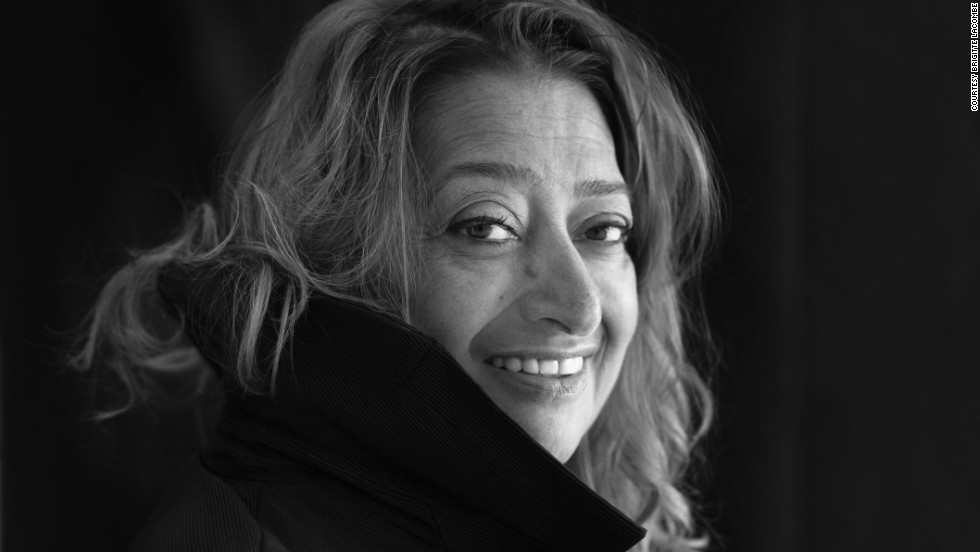 Zaha Hadid, una delle più famose esponenti dell'architettura contemporanea, è morta per un infarto oggi. Irachena nazionalizzata inglese, è stata forse la più famosa "archistar" dopo Gehry, e per questo oggetto di mille polemiche e invidie da una parte, e di "osanna!" dall'altra.
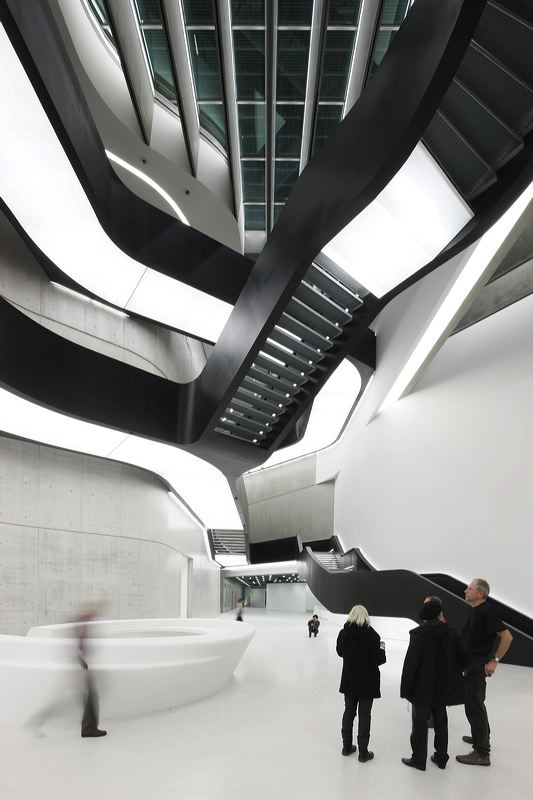
Abbiamo visitato il MAXXI di Roma, e riconosciamo un talento ed un coraggio che vanno oltre la semplice provocazione che a volte è sembrata avere. Zaha Hadid era di certo una persona capace.
mercoledì 30 marzo 2016
Villa Malaparte nella locandina del Festival di Cannes 2016

Immagine tratta da Il disprezzo, di Godard
domenica 13 marzo 2016
Resistance through art

Omar Barghouthi, Ilan Pappé, Mazin Qumsiyeh among speakers at Forum in April
In April 2016, The Freedom Theatre will celebrate its tenth anniversary with a six-day festival of Palestinian performing art and a forum on cultural resistance. The anniversary will bring together Palestinian theatre companies, performers and scholars, with the aim of exploring the role of the arts in the broader Palestinian popular struggle movement.
Speakers at the Forum and Festival will include:
Alaa Hlehel: Post-colonialism and the role of culture
Alaa Hlehel is an author, playwright and journalist. He has an MA in Mass Communication and Fine Arts from Haifa University and is the chief editor of Qadita website for literature and culture. Hlehel is also a translator for human rights and cultural organisations as well as a translator of books and plays.
Alaa Hlehel is an author, playwright and journalist. He has an MA in Mass Communication and Fine Arts from Haifa University and is the chief editor of Qadita website for literature and culture. Hlehel is also a translator for human rights and cultural organisations as well as a translator of books and plays.
Moderator: Nabil Al-Raee, Artistic director of The Freedom Theatre, theatre director and playwright, actor and instructor, trained with Theatre Day Productions.
Hala Nassar: Cultural production and confusing agendas
Hala Nassar is a lecturer, researcher and writer on Arab/Palestinian theatre, literature and drama. She is considered the first Palestinian academic to focus on Palestinian theatre in Western academia. Her book on the history of Palestinian theatre is forthcoming and she is co-editor of Mahmoud Darwish; Exile’s Poet.
Hala Nassar is a lecturer, researcher and writer on Arab/Palestinian theatre, literature and drama. She is considered the first Palestinian academic to focus on Palestinian theatre in Western academia. Her book on the history of Palestinian theatre is forthcoming and she is co-editor of Mahmoud Darwish; Exile’s Poet.
Moderator: Mervat Ayash, Artist and lecturer in interior design at An Najah University, member of the board of The Freedom Theatre.
Ilan Pappé: Culture confronting occupation
Ilan Pappé is a historian, professor at Exeter University and director of the university’s European Centre for Palestine Studies, author of among other books The Ethnic Cleansing of Palestine, The Modern Middle East, and A History of Modern Palestine: One Land, Two Peoples.
Ilan Pappé is a historian, professor at Exeter University and director of the university’s European Centre for Palestine Studies, author of among other books The Ethnic Cleansing of Palestine, The Modern Middle East, and A History of Modern Palestine: One Land, Two Peoples.
Moderator: Gabriel Varghese, Co-artistic director of Sandpit Arts (UK), writer and theatre director, recently completed his Ph.D. at Exeter University on the history of Palestinian theatre after the first Intifada.
Khaled Katamesh: Art under occupation – experiences and common goals
Khaled Katamesh is the director of El Funoun Dance Troupe and a co-founder of the Popular Art Centre. He is a former dancer, instructor and choreographer.
Khaled Katamesh is the director of El Funoun Dance Troupe and a co-founder of the Popular Art Centre. He is a former dancer, instructor and choreographer.
Moderator: Ramzi Abu Radwan, Musician, composer and founder of Al-Kamandjati music society and Dal’ouna ensemble.
Mazin Qumsiyeh: Conceptual dilemmas about cultural resistance
Mazin Qumsiyeh is an author, professor, lecturer and researcher at Bethlehem and Birzeit Universities and director of the Palestine Museum of Natural History and Institute for Biodiversity Research. He has published hundreds of articles and talks and several books, including Mammals of the Holy Land, Sharing the Land of Canaan: human rights and the Israeli/Palestinian Struggle and Popular Resistance in Palestine: A history of Hope and Empowerment.
Mazin Qumsiyeh is an author, professor, lecturer and researcher at Bethlehem and Birzeit Universities and director of the Palestine Museum of Natural History and Institute for Biodiversity Research. He has published hundreds of articles and talks and several books, including Mammals of the Holy Land, Sharing the Land of Canaan: human rights and the Israeli/Palestinian Struggle and Popular Resistance in Palestine: A history of Hope and Empowerment.
Moderator: Manal Tamimi, Activist in the popular resistance in Nabi Saleh, member of the Popular committee against the wall and settlements in Ramallah.
Omar Barghouthi: Effective popular resistance – the cultural boycott model
Omar Barghouthi is an author, researcher and human rights activist. He is the founding committee member of the Palestinian Campaign for the Academic and Cultural Boycott of Israel (PACBI) and co-founder of the Boycott, Divestment and Sanctions movement.
Omar Barghouthi is an author, researcher and human rights activist. He is the founding committee member of the Palestinian Campaign for the Academic and Cultural Boycott of Israel (PACBI) and co-founder of the Boycott, Divestment and Sanctions movement.
Moderator: Shahd Zakarneh, Youth activist, law graduate from Arab American University, member of Jenin Municipality and considered the youngest member of all local committees in Palestine.
Reem Talhami: Women, theatre and resistance
Reem Talhami is a singer and actress who has released several albums and is often featured in festivals around the Middle East. She is a former teacher at National Institute of Music in Jerusalem and Ramallah and performer with El Hakawati – Palestinian National Theatre and Al Kasaba Theatre.
Reem Talhami is a singer and actress who has released several albums and is often featured in festivals around the Middle East. She is a former teacher at National Institute of Music in Jerusalem and Ramallah and performer with El Hakawati – Palestinian National Theatre and Al Kasaba Theatre.
Moderator: Eman Nazzal, Feminist activist leader in the Jenin area, coordinator of Palestinian women’s affairs technical committee, head of the women committee of Al Fatah in Jenin.
Sudhanva Deshpande: What’s next?
Sudhanva Desphande is an actor and director with Jana Natya Manch street theatre company, India, and editor with LeftWord Books publishing company.
Sudhanva Desphande is an actor and director with Jana Natya Manch street theatre company, India, and editor with LeftWord Books publishing company.
Moderator: Faisal Abu Alhayjaa, Actor, theatre instructor and director with The Freedom Theatre and actor with Red Noses Clowndoctors Palestine.
Roundtable discussion: The role of culture in unifying resistance
Ayman Yousef, Professor in Political Sciences and International Relations, Dean of Arts Faculty at Arab American University.
Ayman Yousef, Professor in Political Sciences and International Relations, Dean of Arts Faculty at Arab American University.
Alam Massad, Painter in plastic arts featured in local and international exhibitions, chairman of the board of Naqsh Troupe, activist in social and prisoner issues.
Iyad Staiti, Musician and director of Al-Kamandjati, music instructor, key figure in popularising oriental music.
Other speakers:
Baraa Sharqawi, Photography instructor at The Freedom Theatre.
Bilal Saadi, Chairman of the board of The Freedom Theatre, member of Jenin Refugee Camp Popular Committee and secretary for the Youth Centre in Jenin Refugee Camp.
Jonatan Stanczak, Managing director and co-founder of The Freedom Theatre, former producer at The Swedish National Touring Company, coordinator at The Palestine Solidarity Association in Sweden, and active in the BDS movement in Sweden.
Mustafa Sheta, Journalist and researcher, secretary of the board of The Freedom Theatre, coordinator of the Theatre Festival and Forum on Cultural Resistance.
Mohammed Moawia, Multimedia coordinator at The Freedom Theatre, filmmaker, photographer and graphic designer.
Performances at the Theatre Festival will include:
The Siege by The Freedom Theatre, Searching for Handala by Yes Theatre, Confession by Quds Art, Taha by Amer Hlehel, 15 seconds in Gaza by Mo’min Switat, and a circus performance byThe Palestinian Circus School.
The program will also include theatre and dance workshops, photography and art exhibitions, film screenings, guided tours and much more.
FOLLOW
Website: www.thefreedomtheatre.org/tft10
Facebook: www.facebook.com/thefreedomtheatre
Twitter: @Freedom_Theatre
Website: www.thefreedomtheatre.org/tft10
Facebook: www.facebook.com/thefreedomtheatre
Twitter: @Freedom_Theatre
venerdì 11 marzo 2016
CUANDO LA FOTOGRAFÍA COBRA VIDA

Alejandro Matzar
Fotógrafo profesional guatemalteco
11/03/2016 | 6:30 PM
AULA D-14, DE LA UNIVERSIDAD
CENTROAMERICANA
"JOSÉ SIMEÓN CAÑAS" (UCA).

mercoledì 9 marzo 2016
Kazuo Shinohara’s Houses

The 1950s in Japan were a time of rediscovery and renewal in art,

graphics,

furniture,

photography,

ceramics,

woodblock prints,

cinema,

literature,

textile design,

and architecture.
Kazuo Shinohara was a Japanese architect who lived 1925–2006. This is his first house, House in Kugayama, completed 1954.

lunedì 7 marzo 2016
Lorenzo e Jacopo Salimbeni, Crocifissione

E' il racconto della crocifissione di Gesù come fatto che riguarda il tempo: accade nel contemporaneo di chi lo ha dipinto, come si osserva dalle vesti e dai volti dei personaggi; e accade mentre accadono tante cose di minor importanza, come bambini che scappano dalle madri o cani che si spulciano. E mentre le donne si disperano e si strappano i capelli, altri non mostrano nessun segno di attenzione. Il centurione che pronuncia: "Davvero questo è il figlio di Dio" è specchiato rispetto a Longino; l'uno solenne e cosciente di aver detto qualcosa di rischioso, l'altro impaurito e dubbioso. Insomma, questo avvenimento così decisivo, da cui dipendono così tante cose, non obbliga l'intelligenza di nessuno; davanti al fatto ognuno reagisce diversamente.
Sopra le scene umane, accadono quelle divine, dipinte in modo molto intellegibile: l'anima di un ladrone viene portata via dal diavolo e l'altra anima viene presa in custodia dall'angelo; e sopra la croce fiorisce una pianta dove si trova il nido del pellicano, che si strappa la carne per nutrire i suoi figli.
venerdì 4 marzo 2016
A brand new musical instrument
Molin began work on the marble machine in August 2014 and hoped to spend about two months on the project. Its complexity soon spiraled out of control as all 3,000 internal parts had to be designed and fabricated by hand, a time-consuming process that eventually took 14 months. An early version was designed using 3D software, but it was easier for Molin to create parts on the fly leading to it’s Frankenstein appearance. The musician shared much of his progress in regular video updates that he shared on YouTube.
Despite the extreme interest an oddity like the Wintergatan Marble Machine is bound to generate—especially on the internet—don’t expect to see it on tour anytime soon, as the contraption has to be completely disassembled to move it. Molin hopes to build additional music devices, some smaller, or perhaps more suited for transport. You can read a bit more about it on Wired UK.
Iscriviti a:
Post (Atom)
Campionare i fumetti: Samplerman comics by Yvang
"Yvan Guillo, aka Yvang, è un fumettista francese nato nel 1971. Ha cominciato pubblicando fumetti in varie fanzine fin dai primi anni ...

-
 Paul Gauguin, Visione dopo il sermone: cm. 73 x 92, Edimburgo, National Gallery of Scotland Come quelle ragazze dagli abiti tradizionali, ...
 -
 Fig. 1 : Pablo Zelaya Sierra. Paisaje con hombre segando . 73 x 63.5 cm. Sin fecha . Fig. 2 : Pablo Zelaya Sierra. La...